

Overview
Zones allow you to divide your facility into logical areas with specific boundaries, capacity limits, and visual identification. Each zone can be drawn on a map with polygon boundaries and assigned a unique color for easy identification.
Key Features:
- Geographic Boundaries: Draw precise polygon boundaries on an interactive map
- Capacity Management: Set maximum occupancy and track real-time usage
- Visual Identification: Assign colors to distinguish zones at a glance
- Address Integration: Google Places autocomplete for accurate location setting
- Reserved Capacity: Inside offset to reserve spots and prevent full occupancy
Viewing Zones
Access the zones list from Settings → Zones. The table displays all configured zones with their key information.
Zone List Columns
- Name: Descriptive name for the zone (e.g., "North Parking Lot")
- Description: Additional details about the zone purpose
- Status: Active (green) or Inactive (red) indicator
- Color: Visual color badge for map identification
- Max Inside: Maximum capacity of the zone
- Currently Inside: Real-time count of occupied spots
- Creation Date: When the zone was created
Search and Filter
Use the search bar to find zones by name or description. Results update in real-time as you type.
Creating Zones
Click the "Add Zone" button in the top right corner to create a new zone with boundaries and capacity settings.
Required Information
- Name: Unique identifier for the zone (required)
- Description: Optional detailed description of zone purpose
- Status: Active or Inactive (affects access control)
- Color: Visual identifier on maps and dashboards
- Max Inside: Maximum capacity (number of vehicles/people)
- Boundaries: At least 3 points to form a closed polygon
Step-by-Step Creation
- Click "Add Zone" button
- Enter zone name and description
- Set status to Active
- Choose a distinctive color from the palette
- Configure capacity settings (Max Inside, Inside Offset)
- Search for and select the zone address
- Click "Draw" to enter drawing mode
- Click on the map to place boundary points (minimum 3)
- Click "Finish" to complete the boundary
- Review and reorder points if needed
- Click "Save" to create the zone
Zone Configuration
Configure basic zone properties to organize and identify your facility areas.
Name
Provide a clear, descriptive name that identifies the zone's purpose or location. Good examples: "North Parking Lot", "VIP Section", "Loading Zone A", "Visitor Parking".
Description
Add detailed information about the zone's purpose, restrictions, or special conditions. This helps staff understand the zone's use case and any special handling requirements.
Status
- Active: Zone is operational and accepting entries
- Inactive: Zone is disabled; access control devices will deny entry
Use inactive status for seasonal closures, maintenance periods, or zones not yet ready for use without deleting the zone configuration.
Color
Select a color from 20 available options to visually distinguish this zone on maps, dashboards, and reports. Choose colors that make logical sense for your facility (e.g., green for general areas, red for restricted zones, blue for VIP sections).
Capacity Management
Control zone occupancy with capacity limits and real-time tracking to prevent overcrowding and ensure smooth operations.
Max Inside
The maximum number of vehicles or people allowed in the zone simultaneously. When this limit is reached, the system will:
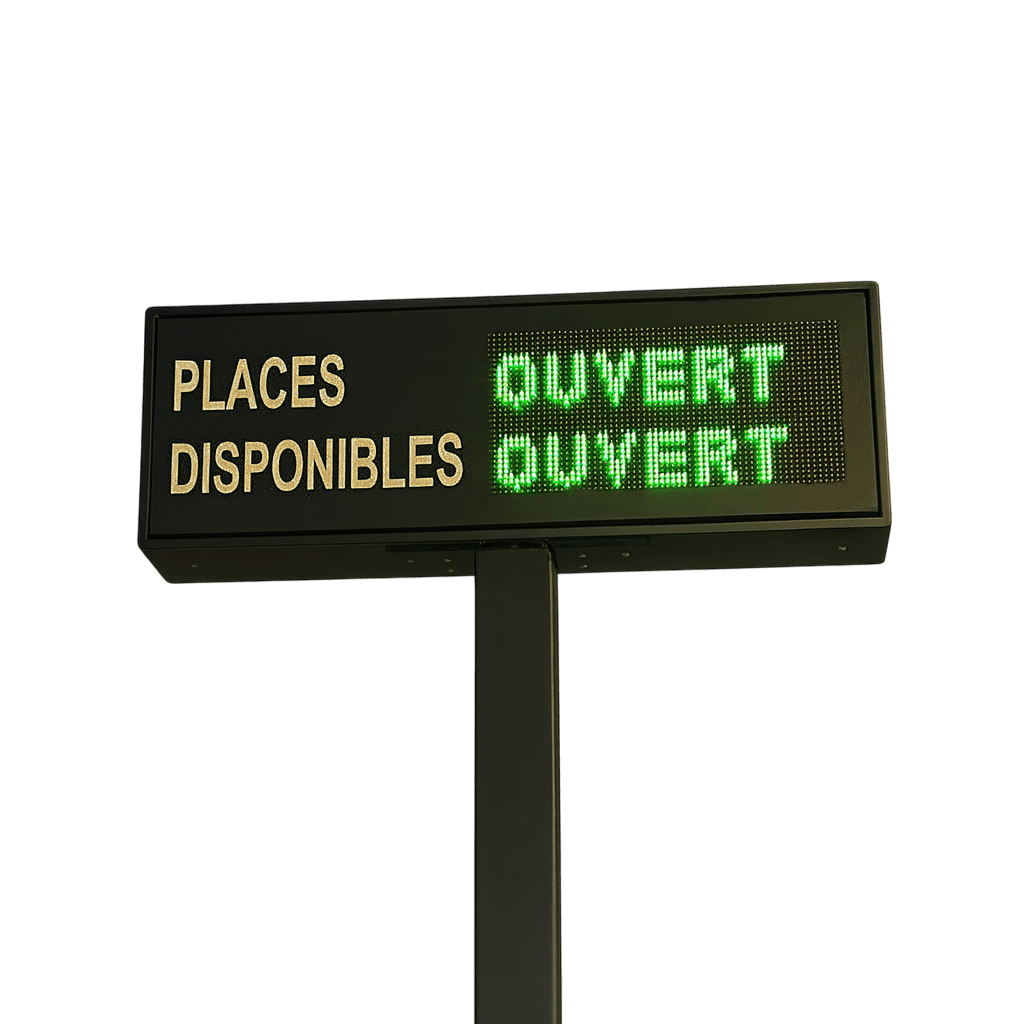
- Display "FULL" status on digital signage
- Deny new entries at access control points
- Send notifications to administrators (if configured)
- Update capacity displays in real-time
Currently Inside
Real-time count of occupied spots in the zone. This value is automatically calculated based on:
- Entry Events: Increment count when vehicles/people enter
- Exit Events: Decrement count when they leave
- Manual Adjustments: Administrators can correct count discrepancies
The currently inside count is displayed throughout the system on dashboards, reports, and signage to provide real-time occupancy information.
Inside Offset (Reserved Capacity)
The inside offset reserves a buffer of spots before the zone shows as full. This is crucial for managing special scenarios:
- Reserved Spots: Keep spots available for VIP guests or special permits
- Emergency Access: Ensure space for emergency vehicles or priority entries
- Staff Parking: Reserve spots for employees even when visitor areas are full
- Buffer Management: Show "FULL" status before reaching absolute capacity
Example: If Max Inside = 100, Inside Offset = 10, and Currently Inside = 85, then Available = 100 - 85 - 10 = 5 spots remaining before showing FULL.
Practical Examples
- Max Inside: 50 spots
- Inside Offset: 5 spots (reserved for VIP)
- Result: General parking shows FULL at 45 vehicles, keeping 5 spots for VIP cards
- Max Inside: 10 spots
- Inside Offset: 2 spots (emergency vehicles)
- Result: Normal loading traffic stops at 8 vehicles, keeping 2 for emergency access
Address & Location
Set the zone's address using Google Places integration for accurate location and map centering.
Address Search
Start typing an address in the Address field to see autocomplete suggestions:
- Type the street address, building name, or landmark
- Suggestions appear in real-time as you type
- Click on the correct address from the dropdown
- Map automatically centers on the selected location
- Zoom level adjusts to show the area clearly
Map Navigation
The interactive map allows you to:
- Pan: Click and drag to move around the map
- Zoom: Use mouse wheel or pinch gesture to zoom in/out
- Search Location: Use address search to jump to specific locations
Drawing Boundaries
Define precise zone boundaries by drawing polygons directly on the map interface.
Drawing Mode
- Navigate to the correct location using address search
- Zoom to an appropriate level (recommended: 15-18)
- Click the "Draw" button to enter drawing mode
- A "Drawing Mode Active" indicator appears on the map
- Click on the map to place boundary points
- Each click adds a new point to the polygon
- The polygon outline appears after 3+ points are placed
- Click "Finish" when the boundary is complete
Drawing Tips
- Place points at corners and edges of your physical area
- Use more points for curved boundaries, fewer for straight edges
- Zoom in for precise point placement
- The polygon automatically closes between first and last points
- You can edit, reorder, or delete points after finishing
Visual Feedback
As you draw, the polygon appears in your selected zone color:
- Fill: Semi-transparent (30% opacity) in zone color
- Border: Solid 2px line in zone color
- Points: Listed in the point management table below map
Managing Polygon Points
After drawing or finishing your zone boundary, manage individual points through the point list interface.
Point List Table
The point list displays all boundary points with their coordinates:
- #: Point number (order in the polygon)
- Latitude: North-south coordinate (6 decimal places)
- Longitude: East-west coordinate (6 decimal places)
- Actions: Delete button for each point
Reordering Points
Change the order of boundary points using drag-and-drop:
- Click and hold the drag handle (⋮⋮) next to point number
- Drag the point up or down in the list
- Release to drop the point in the new position
- The polygon updates immediately to reflect the new order
Point order determines how the polygon is drawn. Reordering can fix crossing lines or adjust the shape without adding/removing points.
Deleting Points
Remove unwanted or incorrect points:
- Locate the point in the list
- Click the red delete icon (🗑️) on the right
- Point is immediately removed from the polygon
- Polygon updates to exclude the deleted point
Editing Strategies
- Refining Shape: Add more points in drawing mode, then delete excess points
- Straightening Edges: Delete intermediate points between two endpoints
- Fixing Crossovers: Reorder points to prevent boundary lines from crossing
- Starting Over: Delete all points and re-enter drawing mode
Colors & Visualization
Zone colors provide instant visual identification across maps, dashboards, and reports.
Zone Color
Each zone is assigned a color for easy visual identification. Colors help you quickly recognize zones in lists, reports, maps, and dashboards.
Available Colors:
Color Usage
Zone colors appear throughout the system:
- Maps: Polygon fill (30% opacity) and border (solid)
- Zone List: Color badge next to zone name
- Dashboards: Capacity indicators and status displays
- Reports: Zone identification in tables and charts
- Entry Logs: Quick zone recognition in event lists
Color Strategy
✓ Color Strategy:
- Use colors consistently across related zones
- Reserve specific colors for priority levels (e.g., red for urgent)
- Choose contrasting colors for frequently used zones
- Consider color-blind accessibility when selecting colors
Color Usage Examples
Develop a consistent color scheme for your facility:
- By Access Level: Blue for public, Orange for restricted, Red for private
- By Zone Type: Green for parking, Purple for loading, Teal for service
- By Building: Different color per building or facility section
- By Priority: Warm colors (red, orange) for priority zones, cool colors (blue, green) for general areas
Best Practices
Follow these guidelines for effective zone management and optimal facility operations.
Zone Design
- ✅ Align zone boundaries with physical infrastructure (fences, painted lines, curbs)
- ✅ Keep zones logically sized - not too large (hard to manage) or too small (too many zones)
- ✅ Ensure zones don't overlap - each area should belong to exactly one zone
- ✅ Use descriptive names that staff can understand immediately
- ✅ Create zones that match how you want to control and report on areas
Capacity Planning
- ✅ Set Max Inside to actual physical capacity (count parking spaces or area)
- ✅ Use Inside Offset to reserve 5-10% capacity for special cases
- ✅ Monitor capacity utilization regularly and adjust limits based on actual usage
- ✅ Account for disabled parking, reserved spots, and emergency access in offset
- ✅ Document capacity decisions for future reference and audits
Boundary Accuracy
- ✅ Zoom in close (level 17-19) for precise boundary drawing
- ✅ Walk the physical area first to understand exact boundaries
- ✅ Place points at actual corners and transition points
- ✅ Use satellite imagery when available for better accuracy
- ✅ Test access control at zone edges to verify boundary accuracy
Organization
- ✅ Develop and document a consistent naming convention
- ✅ Create a color coding system and stick to it
- ✅ Keep zone descriptions updated as usage changes
- ✅ Review zones quarterly for accuracy and relevance
- ✅ Archive unused zones rather than deleting (preserves historical data)
Common Mistakes to Avoid
- ❌ Creating too many small zones - increases complexity without benefit
- ❌ Overlapping zone boundaries - causes access control conflicts
- ❌ Setting capacity limits without measuring actual space
- ❌ Using similar colors for adjacent zones - reduces visibility
- ❌ Not accounting for reserved spots in capacity planning
- ❌ Drawing boundaries while zoomed out - leads to inaccurate shapes
- ❌ Forgetting to set Inside Offset for special-use zones
Troubleshooting
- Polygon lines crossing: Points are in wrong order - use drag-and-drop to reorder
- Zone showing full prematurely: Check Inside Offset setting and reduce if too high
- Count not updating: Verify devices are assigned to correct zones in device settings
- Wrong shape after saving: Review point order and delete any duplicate points
- Can't enter drawing mode: Finish any existing drawing first, then click Draw again
- Zone boundaries match physical layout
- Capacity limits set accurately with appropriate offset
- Colors follow consistent scheme
- Names are clear and descriptive
- No overlapping zones
- At least 3 boundary points forming closed polygon
- Status set to Active when ready for use
Zones Configured!
Your zone management system is ready. Continue setting up access control and device configuration.